

- Insects are used for entertainment among children. In addition to being used as food and medicine, insects are also used as toys, in religious ceremonies, and for a variety of other purposes [1].
- Some Malays and Orang Asli in Malaysia, particularly those who lived in solitude and distant from other people, used insects as entertainment.
- Dundubia vaginata were considered amusement for Orang Asli children. Moreover, dragonflies and butterflies were often caught and tethered by children to observe their flight [1].
- In Malay villages, these insects were sometimes used similarly to those among Orang Asli – children enjoyed watching them flutter, often tethered by the abdomen [1].
- Even at a very young age, Dayak Lundayeh community relied on insects for their subsistence. It is challenging to find contemporary toys and entertainment in isolated places. As a result, the kids in this neighbourhood used the objects around them as toys, and insects are one of them.
- Large insects—such as cicadas (Pomponia merula), carpenter bees, three-horned beetles, and Chalcosoma moellenkampi were caught (only harmless males in some species, (e.g. Xylotrupes latipes), tied to strings, and allowed to fly or “perform” aerial tricks. This was akin to playing with a living kite [2].
- Ant-lion larval play has been recorded throughout Southeast Asia, including Malaysia and Indonesia; children would ‘fish’ for larvae by tickling their pit sides, or dropping ants into them. Since all the homes are raised off the ground, the space beneath is often used as a playground for children [2].
- The fascination with ant-lion larvae—the “doodlebugs” that dig little conical pits in sandy soil—has long provided spontaneous children’s entertainment. Living in the bottom of a little pit in the sandy soil makes the larva incredibly fascinating. It lurks in the pit waiting for small terrestrial insects to fall into it [2,3].
- Hence the name “ant-lion,” where children would toss an ant into the pit and observe how it was caught in the massive mandibles of the larva [2,3].
- These insect-based amusements formed part of a larger tradition where indigenous children turned readily available natural objects into toys-reflecting environments of resource scarcity and social isolation [4].
- Theoretical frameworks suggest these insects’ interactions are forms of anarchic gameplay (paidia) or mimicry, where children experiment with biological agents in playful, symbolic ways [4].
Insects that are used for entertainment include bumblebees, horned beetles, dragonflies, green cicada:
1) Bumblebees
- Bumblebees that forage within the trumpet-shaped morning glory flowers can easily be trapped by closing the petals, entrapping the bumblebees within
- Feeling threatened, the bees will buzz loudly and this will excite children
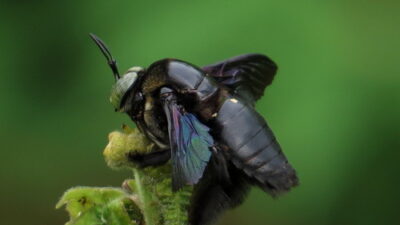
Figure 1: Xylocopa latipes. Source: iNaturalist
2) Horned beetles
- With bizarre horns on their head, they become good candidates for insect wrestling games for children
- The males have large horns on the head, females have smaller ones (Figure 2)
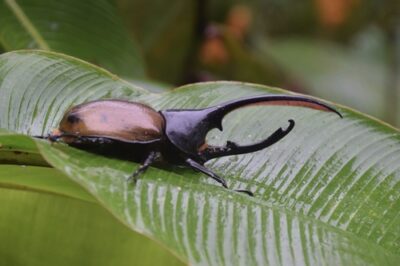
Figure 2: Large male Oryctesrhinocerous. Source: iNaturalist
3) Dragonflies
- A small amount of rubber latex dabbed on at the end of a coconut frond midrib makes an excellent sticky trap to catch dragonflies
- Once stuck to the latex, the dragonfly will be cleaned using some cooking oil, and a thread is tied to the end of the abdomen
- Upon being released, the dragonfly will fly and the child will hold on to the other end of a thread and run to follow the dragonflies, like a kite, amidst much commotion and excitement (Figure 3)
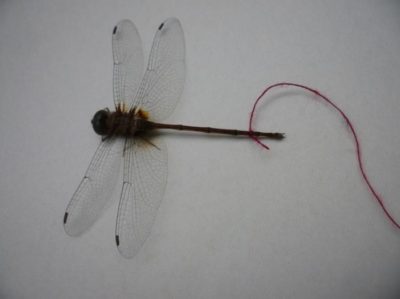
Figure 3: A dragonfly attached on a thread
4) Green cicada
- They are attached to a string so they can fly or “perform” within the bounds as a kind of kid-friendly entertainment
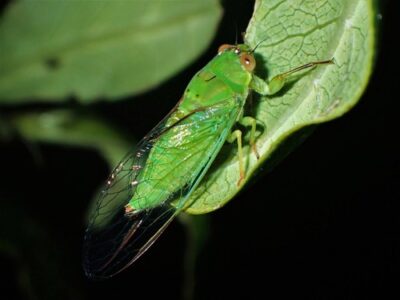
Figure 4: Green cicada, Dunbudia vaginata. Source: iNaturalist
5) Ant-lion larvae (Neuroptera, Myrmeleontidae)
- Kids would throw an ant into the pit and watch as it was seized by the larva’s enormous mandibles – hence the name ‘ant-lion’
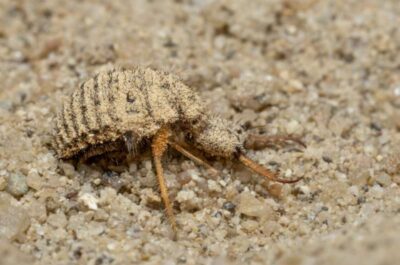
Figure 5: Ant-lion larvae. Source: https://phys.org/
References:
- Jai Kemalok et al 2019 IOP Conf. Ser.: Earth Environ. Sci. 269 012024
- Chung AY, Binti M, Fadan A. Ethnoentomological survey at the northern Kayan Mentarang National Park, East Kalimantan, Indonesia. Joint biodiversity expedition in Kayan Mentarang National Park. 2003:343-56.
- Farah Hani MM, Sabran SF, Ismail N, Mohamed M, Nur Bahiyah AW, Sapaat A. Insect exhibition as a tool to promote biodiversity conservation among children.
- Shen K. Playing with ants & other insects: ant mimicry as a phenomenological approach in relation to games and technology – Interalia Magazine [Internet]. Interalia Magazine. 2017. Available from:
https://www.interaliamag.org/articles/kuai-shen-playing-ants-insects